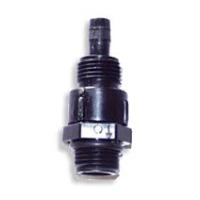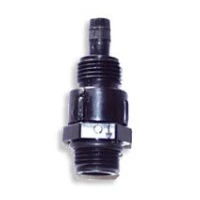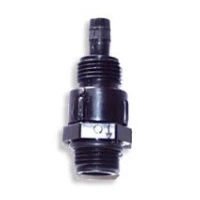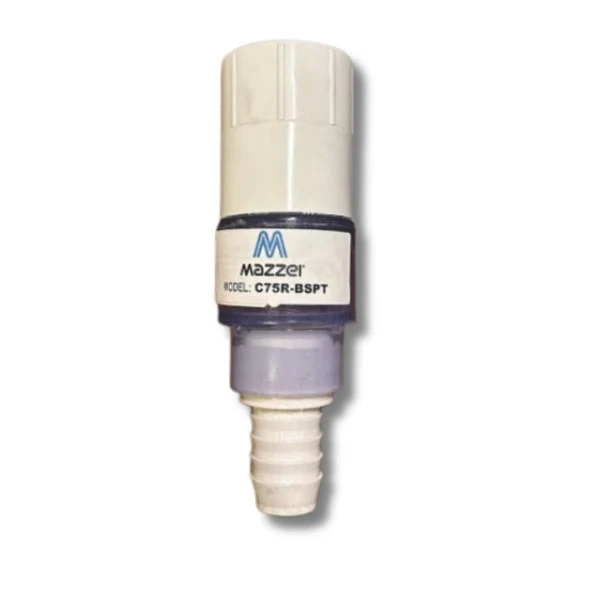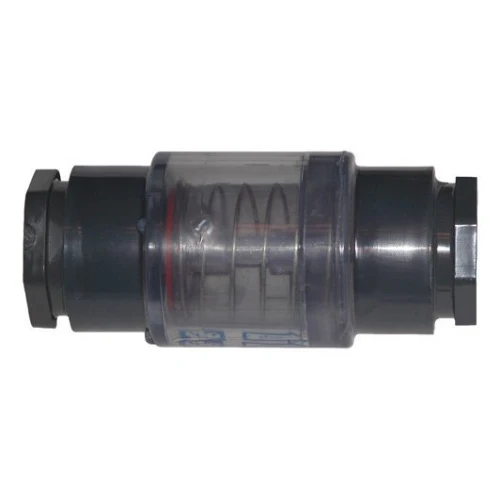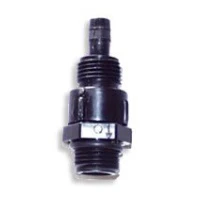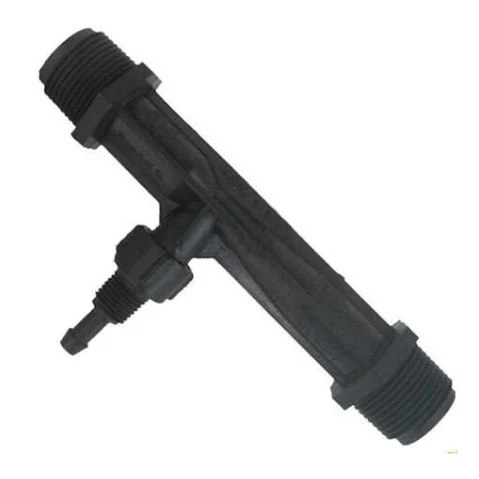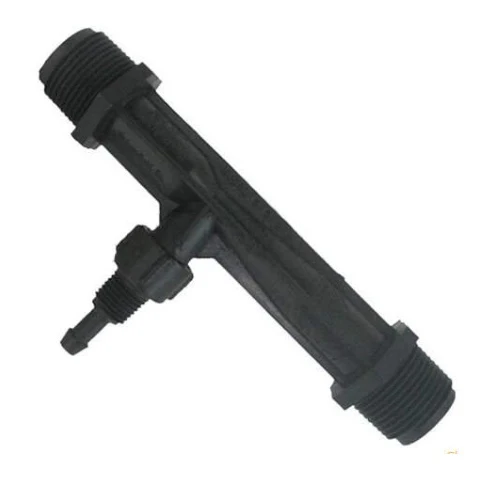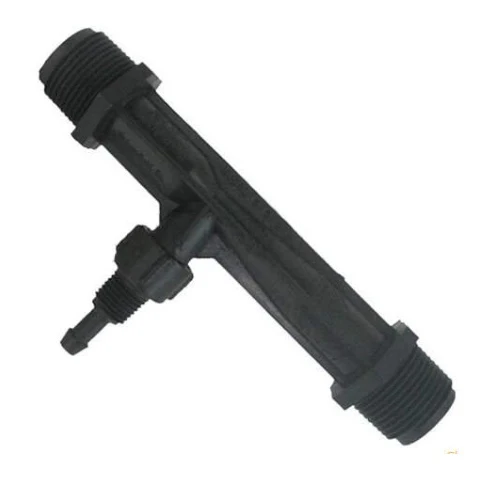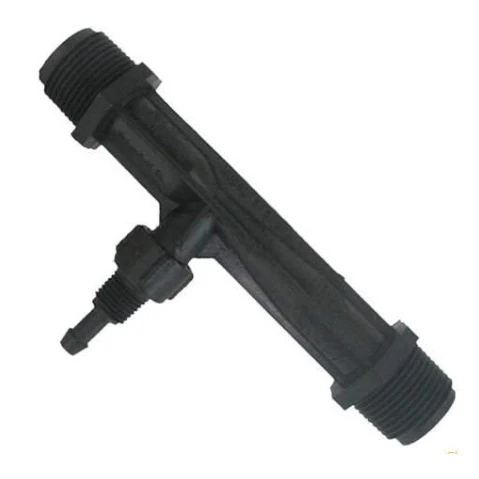
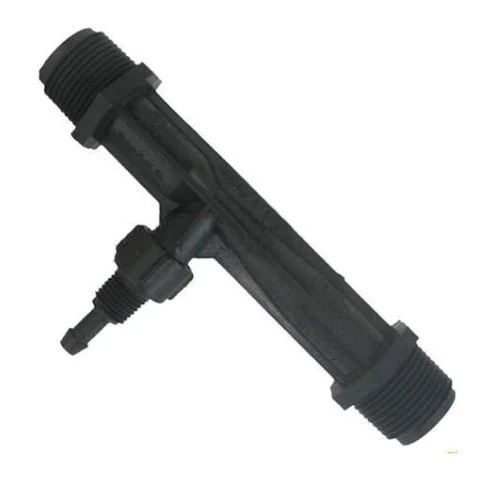
Mazzei - 1583 Series - 1.5" Male NPT Inlet/Outlet Connections (0.50" Barbed/Male NPT Threaded Suction Port Cap)
Mazzei 1583 Series Technical Details
| Model Series | Mazzei 1583 |
| Inlet Connection | 1.5" Male NPT (1.900" diameter) |
| Outlet Connection | 1.5" Male NPT (1.900" diameter) |
| Suction Port | 0.50" Barbed/Male NPT Threaded Cap |
| Material Options | Polypropylene (PP), PVDF, Natural PVDF, ECTFE |
| Operating Principle | Differential pressure venturi with internal mixing vanes |
| Moving Parts | None (zero maintenance design) |
| Certifications | NSF 61 and FDA approved (Natural PVDF models) |
Setting Up Your Mazzei 1583 Injector
- Thread the 1.5" male NPT inlet and outlet connections into your mainline piping using appropriate thread sealant rated for your chemical application.
- Connect your chemical feed line or air supply to the 0.50" barbed suction port, ensuring a secure fit to prevent air leaks or chemical drips.
- Verify a minimum pressure differential between inlet and outlet to initiate vacuum at the suction port (consult Mazzei performance charts for your specific flow rate).
- Start water flow and confirm proper chemical draw or gas injection through the suction port before putting the system into full operation.
- Monitor outlet pressure periodically to ensure consistent injection performance as system conditions change.
Material Selection & Applications
The Mazzei 1583 Series is available in three material grades to match your chemical environment. Polypropylene (PP) handles most acids and alkalis at an economical price point. PVDF offers superior resistance to ozone, sulfuric acid, nitric acid, chlorine, and UV exposure for harsher environments. ECTFE excels in high-alkalinity applications above pH 10 with extreme chemical resistance and low flammability. Natural PVDF is required for NSF 61 and FDA compliance in potable water systems. The 1583 Series works across commercial water treatment, aquaculture oxygenation, fertigation, ozone injection, chlorine dosing, and industrial chemical feed systems where the 1.5" NPT connection size matches your process piping.
Mazzei 1583 Series Technical Details
| Model Series | Mazzei 1583 |
| Inlet Connection | 1.5" Male NPT (1.900" diameter) |
| Outlet Connection | 1.5" Male NPT (1.900" diameter) |
| Suction Port | 0.50" Barbed/Male NPT Threaded Cap |
| Material Options | Polypropylene (PP), PVDF, Natural PVDF, ECTFE |
| Operating Principle | Differential pressure venturi with internal mixing vanes |
| Moving Parts | None (zero maintenance design) |
| Certifications | NSF 61 and FDA approved (Natural PVDF models) |
Setting Up Your Mazzei 1583 Injector
- Thread the 1.5" male NPT inlet and outlet connections into your mainline piping using appropriate thread sealant rated for your chemical application.
- Connect your chemical feed line or air supply to the 0.50" barbed suction port, ensuring a secure fit to prevent air leaks or chemical drips.
- Verify a minimum pressure differential between inlet and outlet to initiate vacuum at the suction port (consult Mazzei performance charts for your specific flow rate).
- Start water flow and confirm proper chemical draw or gas injection through the suction port before putting the system into full operation.
- Monitor outlet pressure periodically to ensure consistent injection performance as system conditions change.
Material Selection & Applications
The Mazzei 1583 Series is available in three material grades to match your chemical environment. Polypropylene (PP) handles most acids and alkalis at an economical price point. PVDF offers superior resistance to ozone, sulfuric acid, nitric acid, chlorine, and UV exposure for harsher environments. ECTFE excels in high-alkalinity applications above pH 10 with extreme chemical resistance and low flammability. Natural PVDF is required for NSF 61 and FDA compliance in potable water systems. The 1583 Series works across commercial water treatment, aquaculture oxygenation, fertigation, ozone injection, chlorine dosing, and industrial chemical feed systems where the 1.5" NPT connection size matches your process piping.
Description
Mazzei 1583 Series Technical Details
| Model Series | Mazzei 1583 |
| Inlet Connection | 1.5" Male NPT (1.900" diameter) |
| Outlet Connection | 1.5" Male NPT (1.900" diameter) |
| Suction Port | 0.50" Barbed/Male NPT Threaded Cap |
| Material Options | Polypropylene (PP), PVDF, Natural PVDF, ECTFE |
| Operating Principle | Differential pressure venturi with internal mixing vanes |
| Moving Parts | None (zero maintenance design) |
| Certifications | NSF 61 and FDA approved (Natural PVDF models) |
Setting Up Your Mazzei 1583 Injector
- Thread the 1.5" male NPT inlet and outlet connections into your mainline piping using appropriate thread sealant rated for your chemical application.
- Connect your chemical feed line or air supply to the 0.50" barbed suction port, ensuring a secure fit to prevent air leaks or chemical drips.
- Verify a minimum pressure differential between inlet and outlet to initiate vacuum at the suction port (consult Mazzei performance charts for your specific flow rate).
- Start water flow and confirm proper chemical draw or gas injection through the suction port before putting the system into full operation.
- Monitor outlet pressure periodically to ensure consistent injection performance as system conditions change.
Material Selection & Applications
The Mazzei 1583 Series is available in three material grades to match your chemical environment. Polypropylene (PP) handles most acids and alkalis at an economical price point. PVDF offers superior resistance to ozone, sulfuric acid, nitric acid, chlorine, and UV exposure for harsher environments. ECTFE excels in high-alkalinity applications above pH 10 with extreme chemical resistance and low flammability. Natural PVDF is required for NSF 61 and FDA compliance in potable water systems. The 1583 Series works across commercial water treatment, aquaculture oxygenation, fertigation, ozone injection, chlorine dosing, and industrial chemical feed systems where the 1.5" NPT connection size matches your process piping.