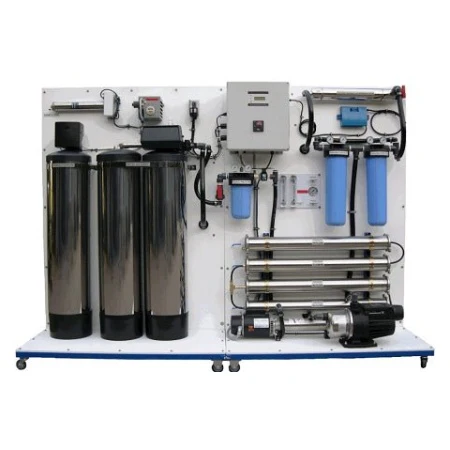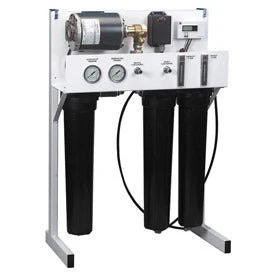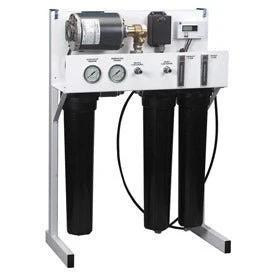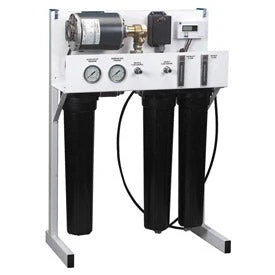
Watts -GTS550S-NAGF-PT Watts Non-Branded 5 Stage Reverse Osmosis System Plastic Tank
System Performance & Capacity
Operating Requirements & Dimensions
| Manufacturer | Watts Water Technologies |
| Model Number | GTS550S-NAGF-PT |
| Inlet Pressure Range | 40-80 PSI (recommended 40 PSI minimum) |
| Maximum Water Hardness | 15 GPG (grains per gallon) |
| Installation Location | Under-sink residential applications |
| Tank Material | Plastic with butyl diaphragm |
| Application Class | Residential point-of-use drinking water |
Ideal Use Cases
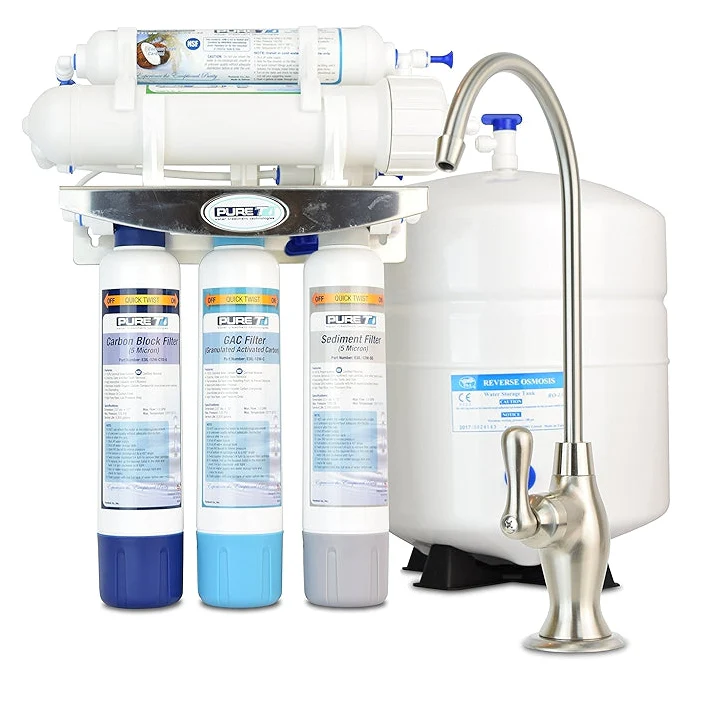
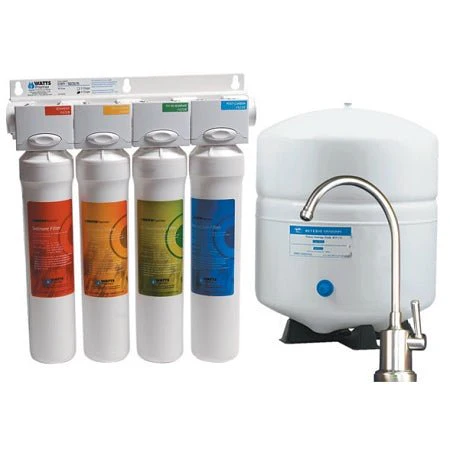
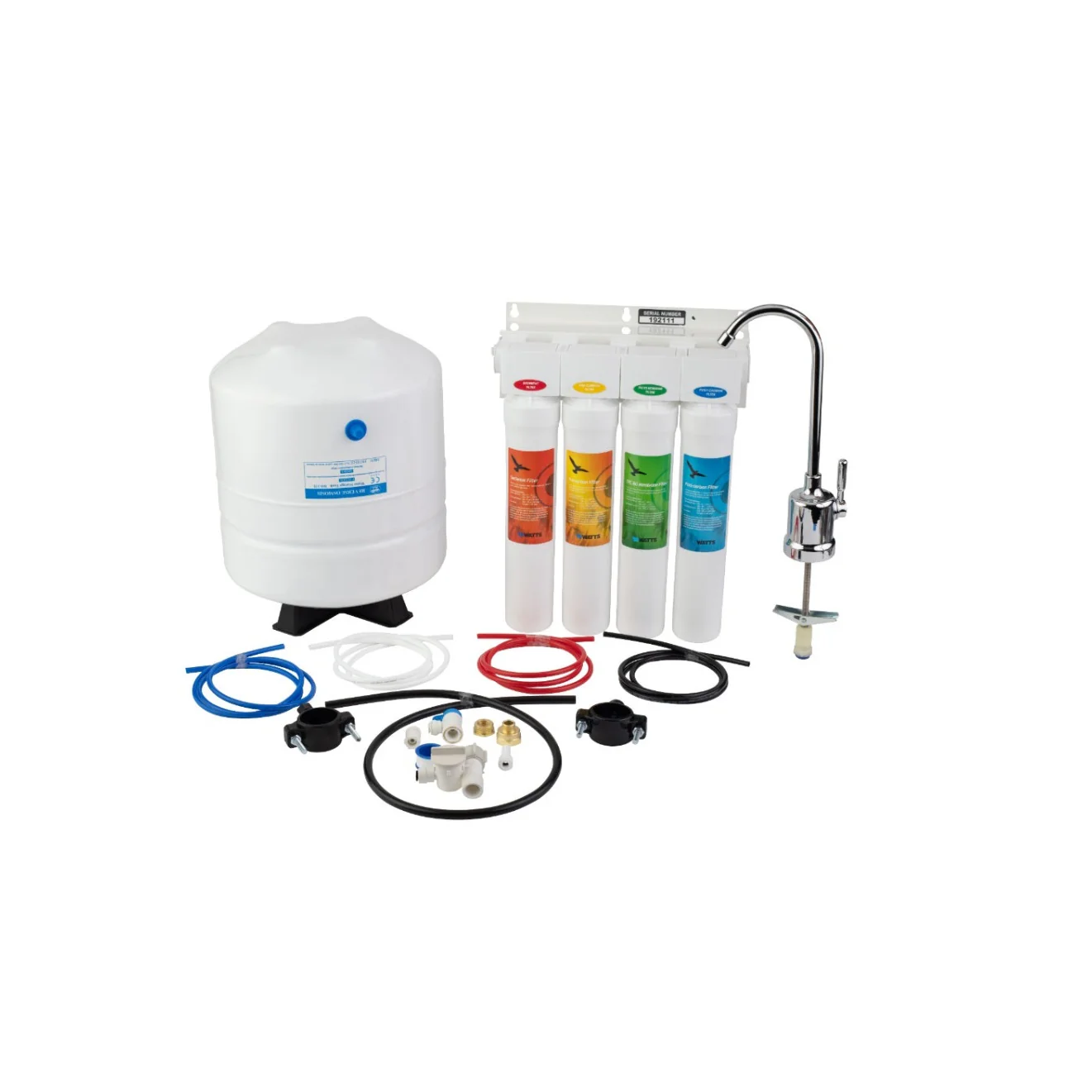
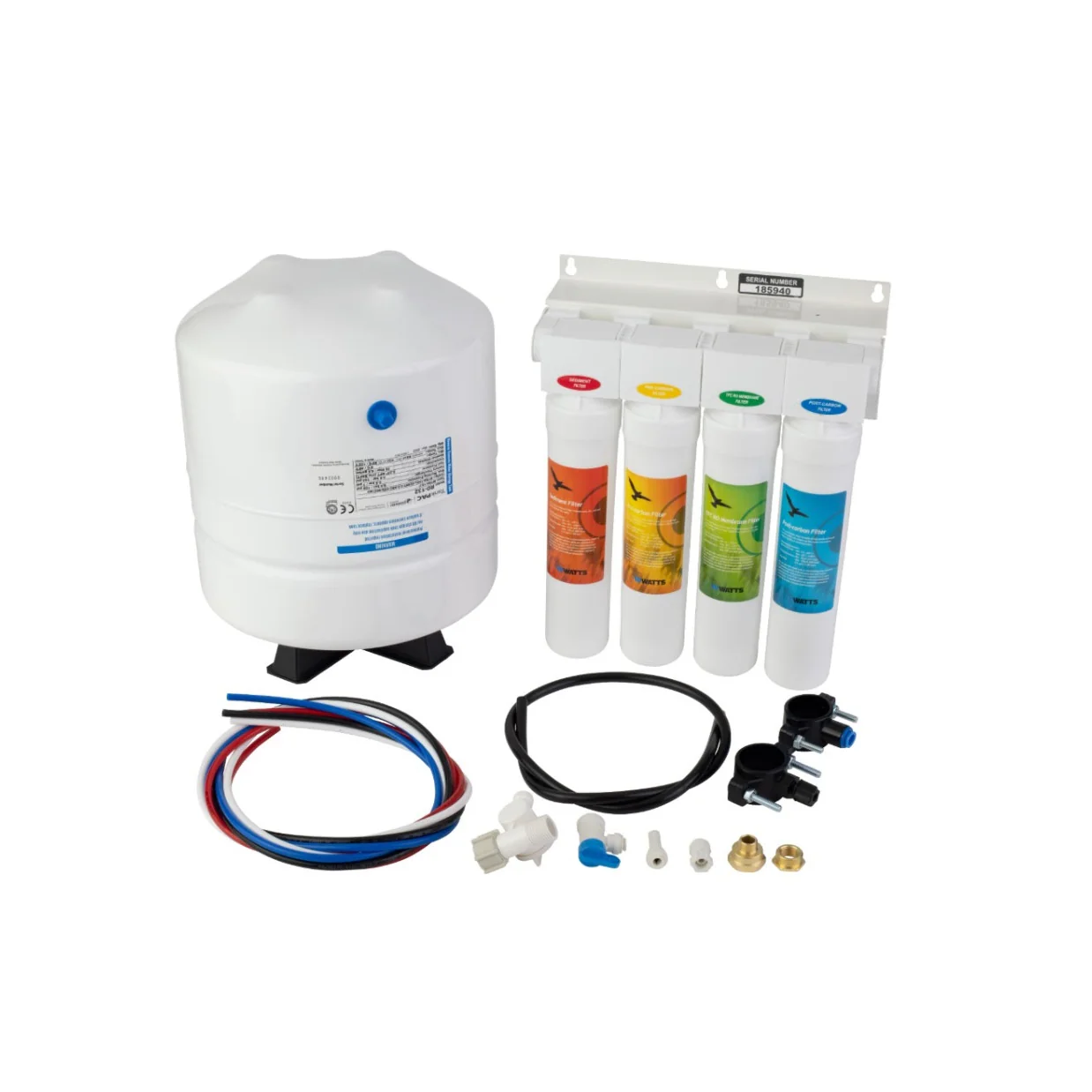
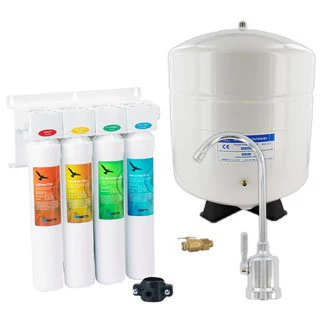
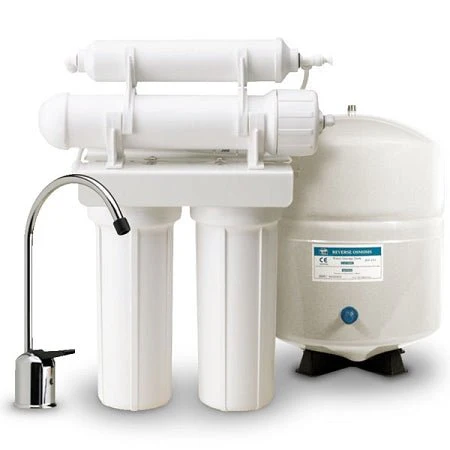
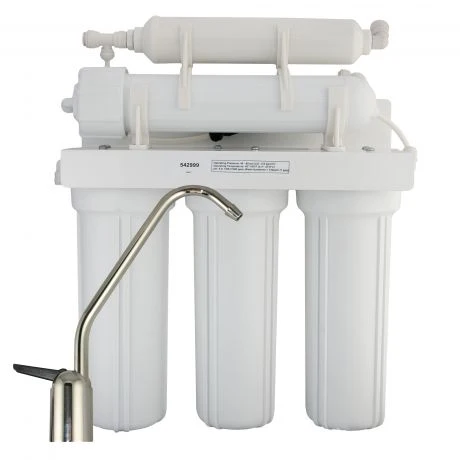
The Watts GTS550S-NAGF-PT is designed for residential under-sink installation in municipal water supplies with inlet pressure between 40-80 PSI and water hardness not exceeding 15 GPG. The 5-stage filtration process begins with a sediment filter for particulate removal, followed by two carbon block pre-filters that reduce chlorine taste and odor while protecting the thin-film composite RO membrane. The 50 GPD membrane handles the primary contaminant reduction, filtering dissolved solids, heavy metals, and microorganisms, while the final polishing filter ensures fresh-tasting water at the faucet. Quick-connect fittings simplify filter changes and system maintenance without requiring a plumber. This system works best in kitchens where consistent daily water usage justifies the storage tank footprint and where water pressure meets the 40 PSI minimum for optimal membrane performance.
System Performance & Capacity
Operating Requirements & Dimensions
| Manufacturer | Watts Water Technologies |
| Model Number | GTS550S-NAGF-PT |
| Inlet Pressure Range | 40-80 PSI (recommended 40 PSI minimum) |
| Maximum Water Hardness | 15 GPG (grains per gallon) |
| Installation Location | Under-sink residential applications |
| Tank Material | Plastic with butyl diaphragm |
| Application Class | Residential point-of-use drinking water |
Ideal Use Cases
The Watts GTS550S-NAGF-PT is designed for residential under-sink installation in municipal water supplies with inlet pressure between 40-80 PSI and water hardness not exceeding 15 GPG. The 5-stage filtration process begins with a sediment filter for particulate removal, followed by two carbon block pre-filters that reduce chlorine taste and odor while protecting the thin-film composite RO membrane. The 50 GPD membrane handles the primary contaminant reduction, filtering dissolved solids, heavy metals, and microorganisms, while the final polishing filter ensures fresh-tasting water at the faucet. Quick-connect fittings simplify filter changes and system maintenance without requiring a plumber. This system works best in kitchens where consistent daily water usage justifies the storage tank footprint and where water pressure meets the 40 PSI minimum for optimal membrane performance.
Description
System Performance & Capacity
Operating Requirements & Dimensions
| Manufacturer | Watts Water Technologies |
| Model Number | GTS550S-NAGF-PT |
| Inlet Pressure Range | 40-80 PSI (recommended 40 PSI minimum) |
| Maximum Water Hardness | 15 GPG (grains per gallon) |
| Installation Location | Under-sink residential applications |
| Tank Material | Plastic with butyl diaphragm |
| Application Class | Residential point-of-use drinking water |
Ideal Use Cases
The Watts GTS550S-NAGF-PT is designed for residential under-sink installation in municipal water supplies with inlet pressure between 40-80 PSI and water hardness not exceeding 15 GPG. The 5-stage filtration process begins with a sediment filter for particulate removal, followed by two carbon block pre-filters that reduce chlorine taste and odor while protecting the thin-film composite RO membrane. The 50 GPD membrane handles the primary contaminant reduction, filtering dissolved solids, heavy metals, and microorganisms, while the final polishing filter ensures fresh-tasting water at the faucet. Quick-connect fittings simplify filter changes and system maintenance without requiring a plumber. This system works best in kitchens where consistent daily water usage justifies the storage tank footprint and where water pressure meets the 40 PSI minimum for optimal membrane performance.