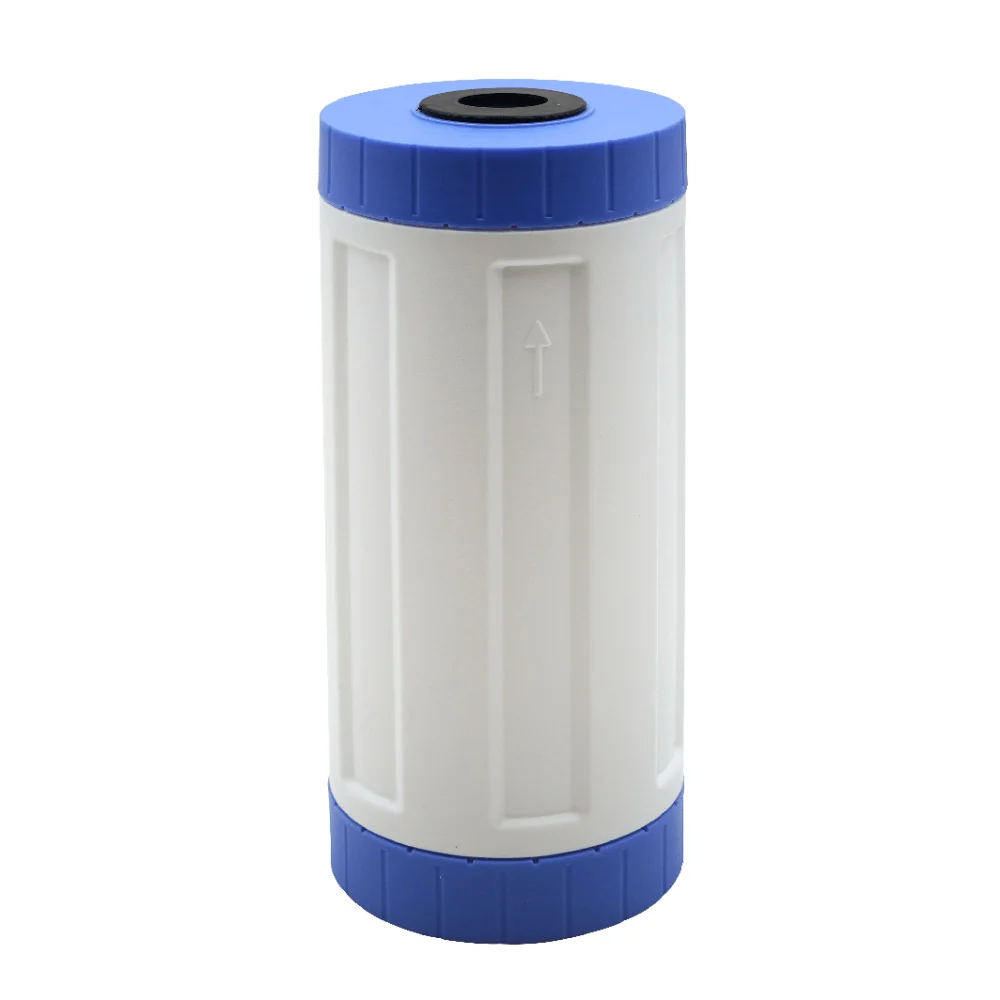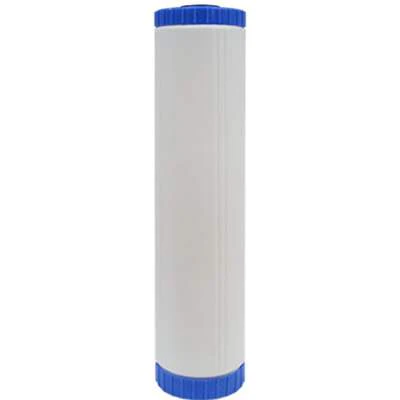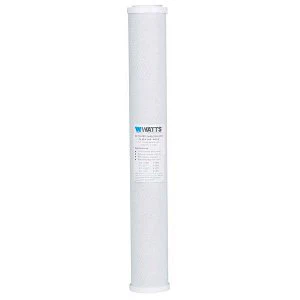
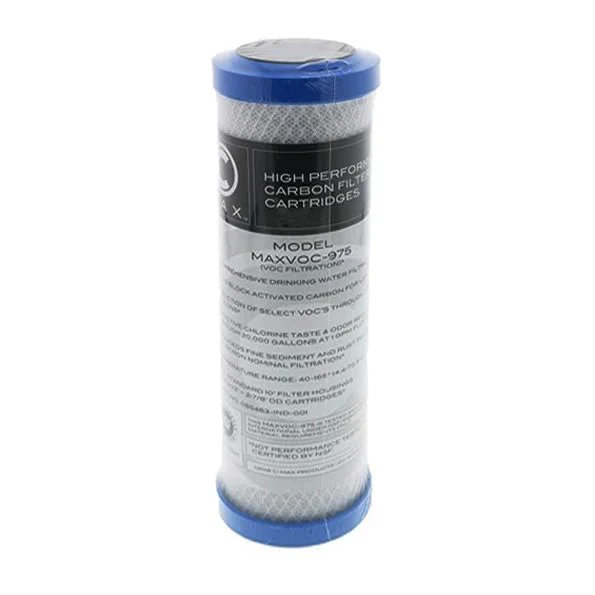
Watts (MAXVOC-975) 10" x 2.5" C-MAX Coconut Shell Carbon Block Filters - for VOC, Cyst Reduction
Watts C-MAX MAXVOC-975 Filter Specs
Performance & Construction
| Model Number | MAXVOC-975 |
| Manufacturer | Watts Water Technologies |
| Primary Reduction | VOCs (Volatile Organic Compounds), Chlorine, Sediment, Cyst |
| Carbon Block Density | High-density thick wall construction for extended contact time |
| Housing Compatibility | Standard 10" slimline and standard 2.5" diameter housings |
| Operating Temperature | 40°F - 100°F (4°C - 38°C) |
| Recommended Replacement | Every 6 months or 20,000 gallons, whichever comes first |
Where to Use the MAXVOC-975
The Watts MAXVOC-975 is designed for reverse osmosis pre-filtration stages and dedicated point-of-use drinking water systems where volatile organic compound reduction is a priority. This filter fits any standard 10-inch slimline or 2.5-inch diameter housing, making it a direct replacement for generic carbon blocks in undersink RO systems, countertop filter units, and inline drinking water setups. The coconut shell carbon block construction offers superior VOC adsorption compared to standard GAC filters, while the 0.5 micron rating provides cyst reduction and fine sediment filtration. Ideal for municipal water sources with known VOC contamination, chlorinated city water requiring taste and odor improvement, or as part of a multi-stage filtration system where chemical contaminant reduction is essential.
Watts C-MAX MAXVOC-975 Filter Specs
Performance & Construction
| Model Number | MAXVOC-975 |
| Manufacturer | Watts Water Technologies |
| Primary Reduction | VOCs (Volatile Organic Compounds), Chlorine, Sediment, Cyst |
| Carbon Block Density | High-density thick wall construction for extended contact time |
| Housing Compatibility | Standard 10" slimline and standard 2.5" diameter housings |
| Operating Temperature | 40°F - 100°F (4°C - 38°C) |
| Recommended Replacement | Every 6 months or 20,000 gallons, whichever comes first |
Where to Use the MAXVOC-975
The Watts MAXVOC-975 is designed for reverse osmosis pre-filtration stages and dedicated point-of-use drinking water systems where volatile organic compound reduction is a priority. This filter fits any standard 10-inch slimline or 2.5-inch diameter housing, making it a direct replacement for generic carbon blocks in undersink RO systems, countertop filter units, and inline drinking water setups. The coconut shell carbon block construction offers superior VOC adsorption compared to standard GAC filters, while the 0.5 micron rating provides cyst reduction and fine sediment filtration. Ideal for municipal water sources with known VOC contamination, chlorinated city water requiring taste and odor improvement, or as part of a multi-stage filtration system where chemical contaminant reduction is essential.
Original: $26.91
-65%$26.91
$9.42Description
Watts C-MAX MAXVOC-975 Filter Specs
Performance & Construction
| Model Number | MAXVOC-975 |
| Manufacturer | Watts Water Technologies |
| Primary Reduction | VOCs (Volatile Organic Compounds), Chlorine, Sediment, Cyst |
| Carbon Block Density | High-density thick wall construction for extended contact time |
| Housing Compatibility | Standard 10" slimline and standard 2.5" diameter housings |
| Operating Temperature | 40°F - 100°F (4°C - 38°C) |
| Recommended Replacement | Every 6 months or 20,000 gallons, whichever comes first |
Where to Use the MAXVOC-975
The Watts MAXVOC-975 is designed for reverse osmosis pre-filtration stages and dedicated point-of-use drinking water systems where volatile organic compound reduction is a priority. This filter fits any standard 10-inch slimline or 2.5-inch diameter housing, making it a direct replacement for generic carbon blocks in undersink RO systems, countertop filter units, and inline drinking water setups. The coconut shell carbon block construction offers superior VOC adsorption compared to standard GAC filters, while the 0.5 micron rating provides cyst reduction and fine sediment filtration. Ideal for municipal water sources with known VOC contamination, chlorinated city water requiring taste and odor improvement, or as part of a multi-stage filtration system where chemical contaminant reduction is essential.