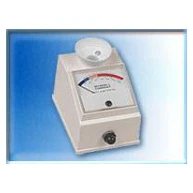
Myron L (442-150qt) 442 Natural Water Standard Calibration Solution 150 PPM
Myron L 442 Natural Water Standard Calibration Solution 150 PPM
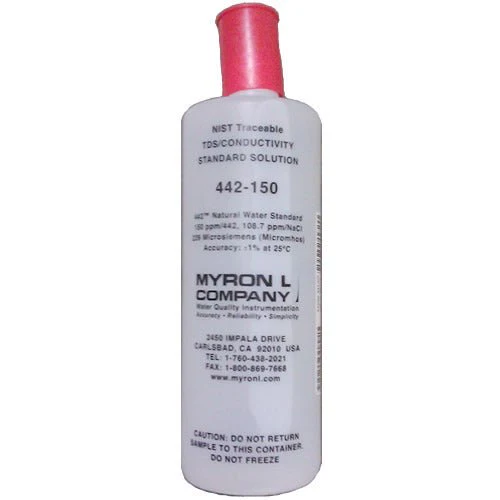
The Myron L 442-150qt calibration solution has been the world standard for more than 35 years because it accurately represents the variable salt composition found in real-world water sources. This 150 PPM solution uses a precise blend of 40% sodium sulfate, 40% sodium bicarbonate, and 20% sodium chloride mixed with deionized water to calibrate conductivity meters for boiler water, cooling towers, municipal supply, wells, and lakes.
The Science Behind the Standard
Natural Water Variability
Natural water sources contain vastly different salt types and concentrations depending on location and geology. A single-salt standard cannot accurately represent this complexity, leading to calibration errors in real-world testing scenarios.
Three-Salt Precision
The 442 formula combines sodium sulfate (40%), sodium bicarbonate (40%), and sodium chloride (20%) to mimic the ionic balance found in most natural water sources. This tri-salt approach ensures your Myron L meter reads accurately across diverse water chemistry conditions.
Universal Application
Use this 150 PPM solution to calibrate many Myron L instruments before testing municipal water, cooling systems, boilers, wells, lakes, or any natural water source. The standard provides a reliable reference point that translates directly to field conditions.
Works With Myron L Instruments
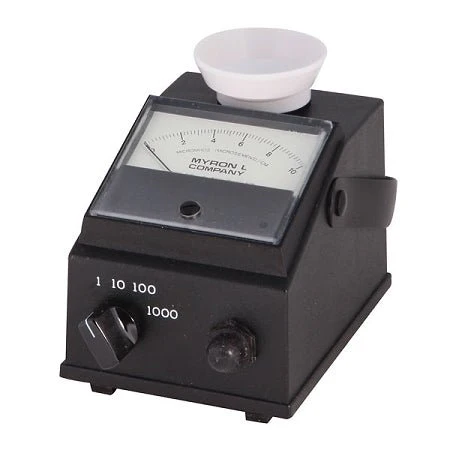
The 442-150qt calibration solution is compatible with most Myron L conductivity meters and multi-parameter instruments designed for natural water testing. This includes portable meters, ultrameter systems, and benchtop monitors used for boiler water analysis, cooling tower management, municipal water quality monitoring, and environmental water testing. Always verify your specific instrument's calibration requirements in the manufacturer documentation, but the 442 Natural Water Standard remains the default choice for any application involving natural or treated water sources rather than pure or ultrapure water systems.
Myron L 442 Natural Water Standard Calibration Solution 150 PPM
The Myron L 442-150qt calibration solution has been the world standard for more than 35 years because it accurately represents the variable salt composition found in real-world water sources. This 150 PPM solution uses a precise blend of 40% sodium sulfate, 40% sodium bicarbonate, and 20% sodium chloride mixed with deionized water to calibrate conductivity meters for boiler water, cooling towers, municipal supply, wells, and lakes.
The Science Behind the Standard
Natural Water Variability
Natural water sources contain vastly different salt types and concentrations depending on location and geology. A single-salt standard cannot accurately represent this complexity, leading to calibration errors in real-world testing scenarios.
Three-Salt Precision
The 442 formula combines sodium sulfate (40%), sodium bicarbonate (40%), and sodium chloride (20%) to mimic the ionic balance found in most natural water sources. This tri-salt approach ensures your Myron L meter reads accurately across diverse water chemistry conditions.
Universal Application
Use this 150 PPM solution to calibrate many Myron L instruments before testing municipal water, cooling systems, boilers, wells, lakes, or any natural water source. The standard provides a reliable reference point that translates directly to field conditions.
Works With Myron L Instruments
The 442-150qt calibration solution is compatible with most Myron L conductivity meters and multi-parameter instruments designed for natural water testing. This includes portable meters, ultrameter systems, and benchtop monitors used for boiler water analysis, cooling tower management, municipal water quality monitoring, and environmental water testing. Always verify your specific instrument's calibration requirements in the manufacturer documentation, but the 442 Natural Water Standard remains the default choice for any application involving natural or treated water sources rather than pure or ultrapure water systems.
Original: $50.27
-65%$50.27
$17.59Description
Myron L 442 Natural Water Standard Calibration Solution 150 PPM
The Myron L 442-150qt calibration solution has been the world standard for more than 35 years because it accurately represents the variable salt composition found in real-world water sources. This 150 PPM solution uses a precise blend of 40% sodium sulfate, 40% sodium bicarbonate, and 20% sodium chloride mixed with deionized water to calibrate conductivity meters for boiler water, cooling towers, municipal supply, wells, and lakes.
The Science Behind the Standard
Natural Water Variability
Natural water sources contain vastly different salt types and concentrations depending on location and geology. A single-salt standard cannot accurately represent this complexity, leading to calibration errors in real-world testing scenarios.
Three-Salt Precision
The 442 formula combines sodium sulfate (40%), sodium bicarbonate (40%), and sodium chloride (20%) to mimic the ionic balance found in most natural water sources. This tri-salt approach ensures your Myron L meter reads accurately across diverse water chemistry conditions.
Universal Application
Use this 150 PPM solution to calibrate many Myron L instruments before testing municipal water, cooling systems, boilers, wells, lakes, or any natural water source. The standard provides a reliable reference point that translates directly to field conditions.
Works With Myron L Instruments
The 442-150qt calibration solution is compatible with most Myron L conductivity meters and multi-parameter instruments designed for natural water testing. This includes portable meters, ultrameter systems, and benchtop monitors used for boiler water analysis, cooling tower management, municipal water quality monitoring, and environmental water testing. Always verify your specific instrument's calibration requirements in the manufacturer documentation, but the 442 Natural Water Standard remains the default choice for any application involving natural or treated water sources rather than pure or ultrapure water systems.